

Sustainable Sports Flooring Built to Perform
Build a High-Performance Floor That Performs for the Planet
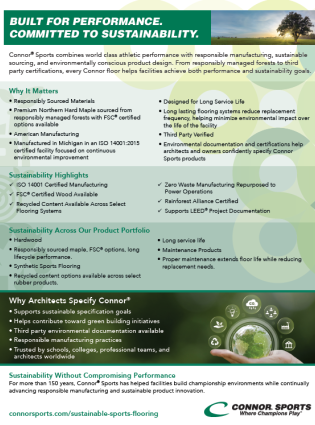
Learn About Our Sustainability EffortsSports Flooring: Built for Performance, Committed to Sustainability
Explore Connor Sports’ commitment to sustainable sports flooring and responsible manufacturing. This sustainability resource highlights responsibly sourced Northern Hard Maple, FSC® certified wood options, ISO 14001:2015 certified manufacturing, recycled content options, third party environmental certifications, and long lasting athletic flooring systems designed to reduce replacement frequency and environmental impact. Learn how Connor Sports combines more than 150 years of sports flooring expertise with sustainable manufacturing practices to deliver high performance hardwood sports floors, synthetic sports flooring, and athletic flooring solutions for schools, universities, recreation facilities, and professional sports venues.
Sustainability Starts in the Forest
Responsibly Managed Northern Hardwood Forests
Connor® Sports maple sports flooring begins in sustainably managed North American forests, where regeneration consistently exceeds harvest. According to MFMA research northern hardwood forests supplying sports flooring prioritize long-term forest health, biodiversity, and responsible yield management.
Unlike extractive or petrochemical-based flooring systems, maple hardwood is renewable, biodegradable, and regionally sourced, reducing transportation emissions while supporting domestic forestry economies. These forests are managed to ensure continuous regrowth, resulting in net-zero or better carbon outcomes over time
Aligned With Industry Sustainability Leadership
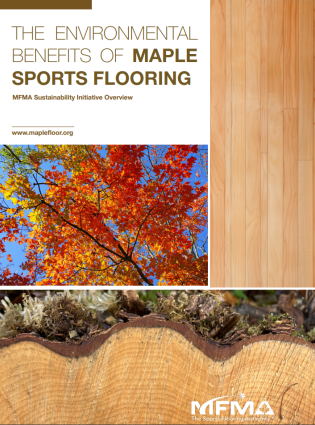
Connor® Sports sustainability principles align with the Maple Flooring Manufacturers Association (MFMA) and peer-reviewed forestry and lifecycle research, including the MFMA Sustainability Initiative, USDA Forest Service hardwood lifecycle studies, and American Hardwood Export Council LCA tools.
This ensures Connor® Sports floors meet not just performance expectations, but science-based environmental benchmarks. By grounding sustainability claims in independently developed research and transparent assessment frameworks, Connor® Sports provides project teams with confidence that environmental goals are supported by verified data, not marketing assumptions. This alignment helps facilities make informed material selections that balance athletic performance, durability, and long-term environmental responsibility.
Carbon Storage That Outperforms Alternatives
Maple Flooring as a Carbon Sink
Hard maple sports flooring does more than reduce emissions, it actively stores carbon.. MFMA data shows the average maple sports floor stores approximately 51 metric tons of CO₂, keeping carbon locked out of the atmosphere for the life of the floor and beyond.
In contrast, synthetic athletic flooring alternatives rely on fossil-fuel-derived materials that emit carbon during production and disposal, with no long-term sequestration benefit. Maple hardwood retains up to 80% of its stored carbon over its service life, often exceeding 75 years.
Verified Environmental Product Declarations
Connor® Sports aligns with industry-recognized Environmental Product Declarations (EPDs) developed in accordance with ISO 14025 and ISO 21930 standards. Independent LCAs evaluate impacts from cradle-to-grave, including:
- Raw material extraction
- Manufacturing and transportation
- Installation and use phase
The industry-average engineered wood flooring EPD demonstrates lower global warming potential (GWP) and non-renewable energy use compared to non-wood alternatives over a 75-year reference service life.
Durability Is Sustainability
Longevity That Reduces Replacement Cycles
True sustainability includes how long a floor performs. Maple sports floors are routinely refinished, not replaced—extending useful life beyond 75 years in many facilities. Fewer replacement cycles mean:
- Less material waste
- Reduced embodied carbon over time
- Lower total cost of ownership
Synthetic alternatives often require full replacement after 15–25 years, increasing landfill impact and lifecycle emissions. Longevity remains one of maple’s most overlooked sustainability advantages.
Healthier Indoor Athletic Environments
Natural Materials, Reduced Chemical Exposure
Maple sports flooring does not contain toxic organochlorines or PVC-based compounds commonly found in synthetic athletic surfaces. This contributes to improved indoor air quality in gymnasiums, fieldhouses, and multipurpose athletic spaces.
Natural wood systems reduce long-term chemical off-gassing concerns and align with child- and athlete-focused facility standards where health, safety, and performance intersect.
Responsibly Sourced, Independently Verified
Connor Sports is proud to source FSC® Certified wood through our certified Chain of Custody program. Forest Stewardship Council® (FSC) certification supports responsibly managed forests that protect biodiversity, support local communities, and promote long term environmental stewardship. By offering FSC Certified products, Connor Sports helps architects, schools, universities, and facility owners meet sustainability objectives without compromising the performance, durability, or quality of our premium hardwood sports flooring systems.
FSC Chain of Custody Certification means that the forest supply chain is unbroken for our FSC-certified products and supports responsible forestry. By choosing FSC-certified products you support transparency and accountability in forest supply chains.
FSC certified maple and subfloor components are available upon request, please contact your Regional Sales Manager for more information. To learn more about the FSC, please visit www.fsc.org.
FSC Certified FSC-C007438